Adaptogen Overview
Adaptogens in the Active Man's Morning Regimen
Tobias Whitfield
·
The conversation about men's nutrition has expanded considerably beyond macronutrients in the past decade. Protein targets, caloric periodisation, and carbohydrate timing remain central topics, but a quieter shift is also underway: the growing recognition that trace minerals and micronutrient density play a foundational role in how an active body functions day to day. This field review traces the practical architecture of a mineral-conscious eating framework, drawing on published nutritional research and field observations from wellness practitioners working across Indonesia.
Minerals occupy a different position in the nutrition landscape from macronutrients. They are required in smaller absolute amounts, they cannot be synthesised by the body, and their dietary sufficiency is heavily dependent on the quality of food sources rather than simply total intake. A diet adequate in calories and macronutrients can still be deficient in key minerals if the food quality or variety is limited — a pattern documented across many rapidly urbanising populations, including in Indonesia.
For men with active lifestyles — defined here as regular physical exertion, whether through sport, outdoor activity, or physically demanding work — mineral losses through perspiration add an additional dimension to the equation. Magnesium, zinc, and sodium are the minerals most significantly lost through sweat, and their replacement through dietary means is a practical consideration that general nutritional guidance often underweights.
The framework presented in this review is not a rigid protocol but an architectural approach: a set of principles for organising food choices to prioritise mineral density, based on published nutritional research and on the dietary patterns most commonly associated with adequate mineral status in adult men. It is intended as editorial documentation, not as a personalised directive — individual circumstances vary, and a qualified nutrition professional can provide guidance specific to personal requirements.
Four minerals appear most consistently in published men's nutritional literature in connection with active lifestyle support: zinc, magnesium, selenium, and iron. Each occupies a distinct functional role and has a distinct whole-food source profile that informs practical dietary construction.
Zinc contributes to normal cognitive function and immune health. Its whole-food sources with highest bioavailability include shellfish (particularly oysters), red meat, seeds (pumpkin seeds being the most frequently cited plant source), and legumes. Phytic acid in grains and legumes can bind zinc and reduce absorption — a consideration for plant-forward dietary patterns that suggests either soaking and sprouting of legumes or diversification of zinc sources.
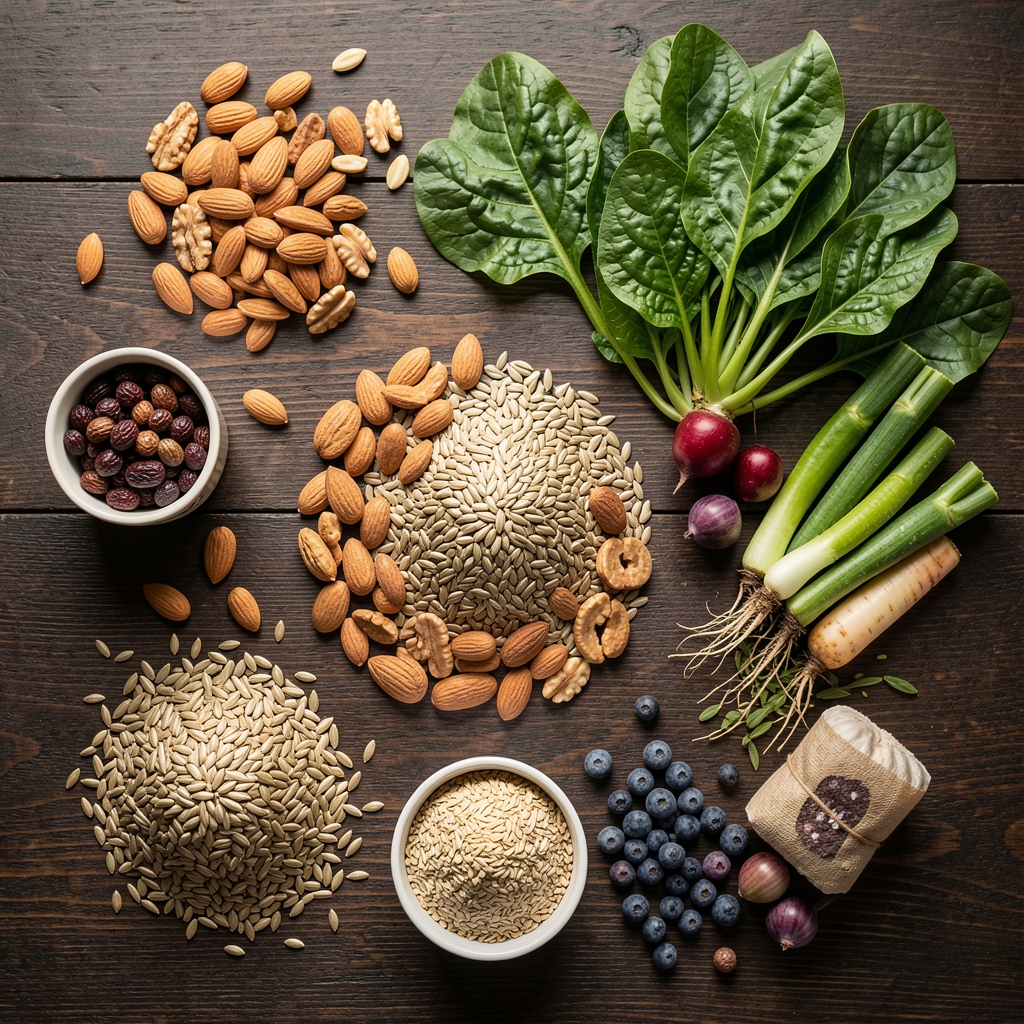
Magnesium contributes to normal energy metabolism and reduces tiredness. It is present in a broad range of plant foods, which in theory makes it one of the more accessible minerals through diet alone. In practice, however, magnesium content in crops varies considerably based on soil quality, and the general trend toward mineral-depleted agricultural soils in many regions has reduced the magnesium density of plant foods compared to historic levels. Dark leafy greens, nuts, seeds, and legumes remain the primary whole-food sources, with cocoa and dark chocolate occupying a notable secondary position.
Selenium contributes to protection of cells from oxidative stress. Brazil nuts are the most concentrated single-food source documented in the literature — though the selenium content of Brazil nuts is itself highly variable depending on the soil selenium levels in the region of origin. Seafood, organ meats, and wholegrains are more consistent dietary sources. The narrow range between adequate and excessive selenium intake makes this mineral worth approaching with awareness, particularly if supplemental sources are being considered alongside dietary intake.
Iron contributes to normal oxygen transport in the body. The distinction between haem iron (from animal sources, particularly red meat and organ meats) and non-haem iron (from plant sources) is relevant to dietary construction: haem iron is significantly more bioavailable. Combining non-haem iron sources with vitamin C-containing foods at the same meal is a well-documented strategy for improving non-haem iron absorption — relevant for those who rely primarily on plant sources for this mineral.
"A diet adequate in calories and macronutrients can still be limited in key minerals if food variety or quality is insufficient."
There is a meaningful overlap between protein-dense whole foods and mineral-dense whole foods that simplifies the practical construction of a mineral-conscious eating framework. Animal proteins — particularly seafood, red meat, and eggs — tend to be among the most mineral-dense foods available, providing zinc, iron, selenium, and B12 in highly bioavailable forms alongside their protein contribution. For men consuming animal products, the protein-mineral overlap means that adequate protein intake from quality whole-food sources substantially addresses the mineral side of the equation.
For plant-forward eating patterns, the mineral picture is more complex. Legumes provide both protein and minerals, but as noted, absorption can be limited by phytic acid content. Seeds — particularly hemp, pumpkin, and sunflower — offer a useful combination of protein, zinc, magnesium, and healthy fatty acids in compact form, making them practical additions to meals or standalone snacks. Fermented foods (tempeh, natto, miso) represent an interesting category: fermentation partially reduces phytic acid content, improving mineral bioavailability compared to their unfermented equivalents.
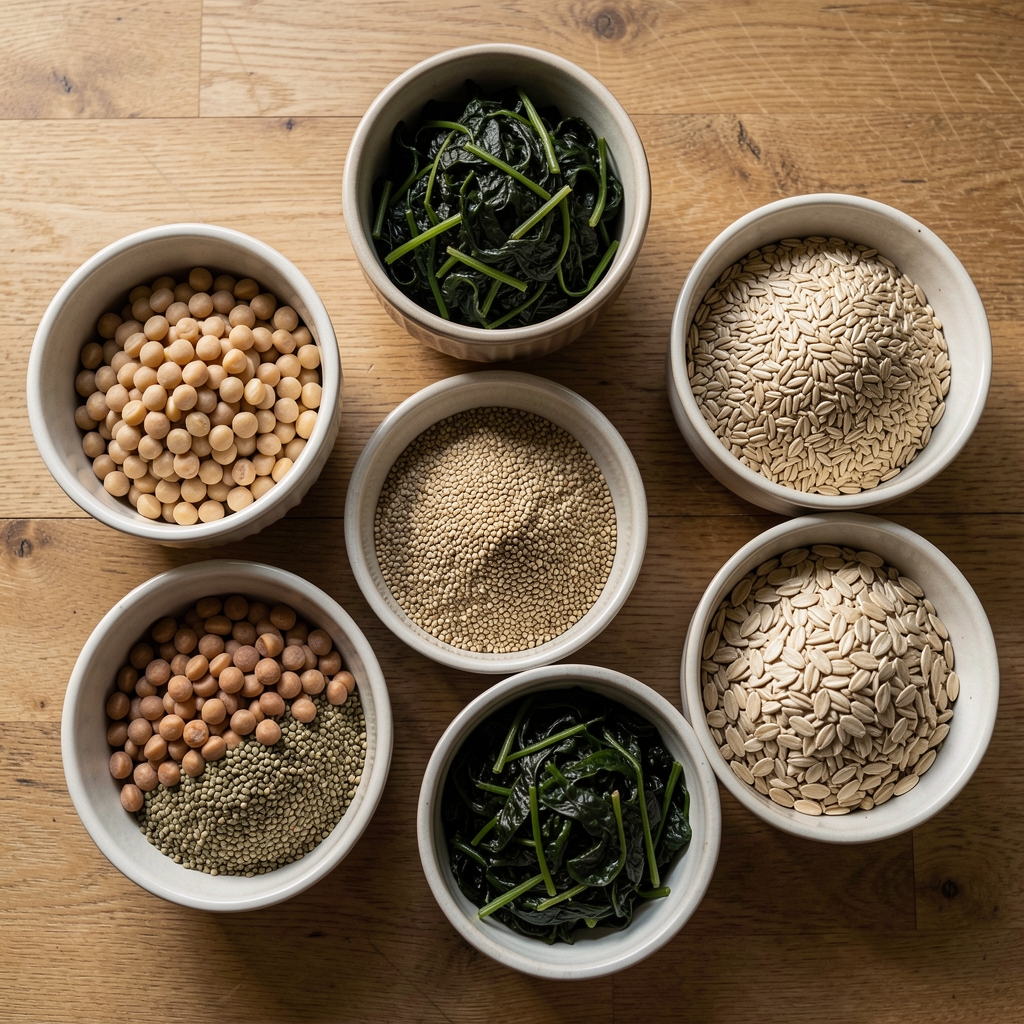
Fig. 03 — Whole-food meal preparation, mineral-focused construction. Field documentation, Q1 2026.
Moving from principles to practice, a mineral-conscious daily eating framework can be constructed around four structural elements: a protein anchor, a mineral-dense vegetable component, a seed or nut component, and a whole grain or legume base. This four-element structure is not a rigid template — meal culture in Indonesia and across the ASEAN region provides abundant natural variety within it — but it provides a useful planning heuristic.
The protein anchor carries the majority of the zinc, iron, and selenium load for the meal, whether it is seafood, poultry, red meat, eggs, or a fermented legume product. The mineral-dense vegetable component — dark leafy greens, cruciferous vegetables, or other nutrient-dense produce — provides magnesium, calcium, potassium, and a range of micronutrients alongside fibre and phytonutrients. Seeds and nuts add a concentrated mineral and fatty acid layer. The whole grain or legume base provides additional minerals alongside complex carbohydrates and fibre.
The Indonesian culinary tradition is well suited to this framework. Traditional dishes frequently combine animal proteins with abundant vegetables, legumes, and seeds, often enhanced with mineral-rich condiments and fermented products. The challenge in contemporary urban eating patterns is that convenience foods and processed staples have displaced the nutritional density of traditional whole-food cooking. The framework proposed here is in many respects a return to the structural logic of traditional food patterns rather than a novel imposition.
A mineral-conscious dietary framework does not exclude supplementation — it contextualises it. Where whole-food intake is reliably covering the nutritional ground, supplementation adds limited incremental value for most minerals. Where dietary patterns are constrained by time, food access, cultural preference, or metabolic requirements, targeted supplementation can address specific gaps that diet alone cannot consistently fill.
The practical question, from the perspective of this review, is how to evaluate a supplement formulation once the dietary foundation is understood. A mineral complex that provides zinc, magnesium, and selenium in bioavailable forms — with verified batch documentation confirming the actual compound concentrations — serves a different function than a supplement positioned as a replacement for dietary attention. The former is a complement to a considered food framework; the latter is a shortcut that the nutritional evidence generally does not support.
We recommend speaking with a qualified wellness or nutrition professional before introducing any new habit or routine to your daily life, particularly if you have specific dietary requirements. The observations in this review are editorial in nature and are intended to inform, not to direct.
For readers interested in specific formulation evaluation, Rolan Review's companion articles on adaptogen sourcing and ingredient documentation standards provide additional context on what to look for in verified nutritional products. The broader architecture of a mineral-conscious daily practice starts with food — and is supported, where appropriate, by products whose documentation standards allow independent assessment.
Rolan Review is an independent editorial publication focused on everyday wellness practices. Articles published on Rolan Review are editorial in nature and reflect the writers' observations on everyday wellness practices. The content is not intended as professional advice, nor as guidance for the management of any specific condition. Readers with specific concerns about their daily routines are encouraged to speak with a qualified wellness professional.

Phoebe Carrington is a contributing writer at Rolan Review with a background in nutritional anthropology and applied wellness documentation. Her editorial focus covers whole-food dietary patterns, mineral nutrition, and the intersection of traditional food culture with contemporary nutritional research. She contributes from Jakarta and the wider ASEAN region.
Related reading: Adaptogens in the Active Man's Morning Regimen →